SDGS and ArmeniaCorps
LOCAL TIME: ...
Every community is shaped by its people, their relationships, and the knowledge they carry.
When these strengths are brought together through purposeful collaboration, they create new opportunities for participation, shared leadership, and collective action.
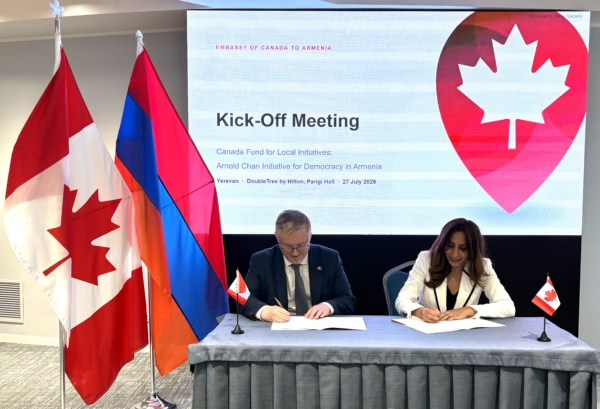
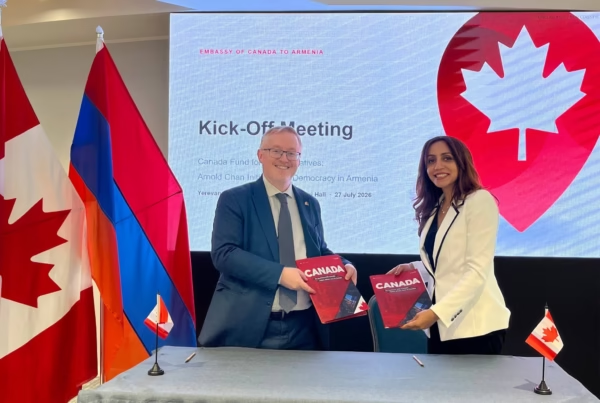
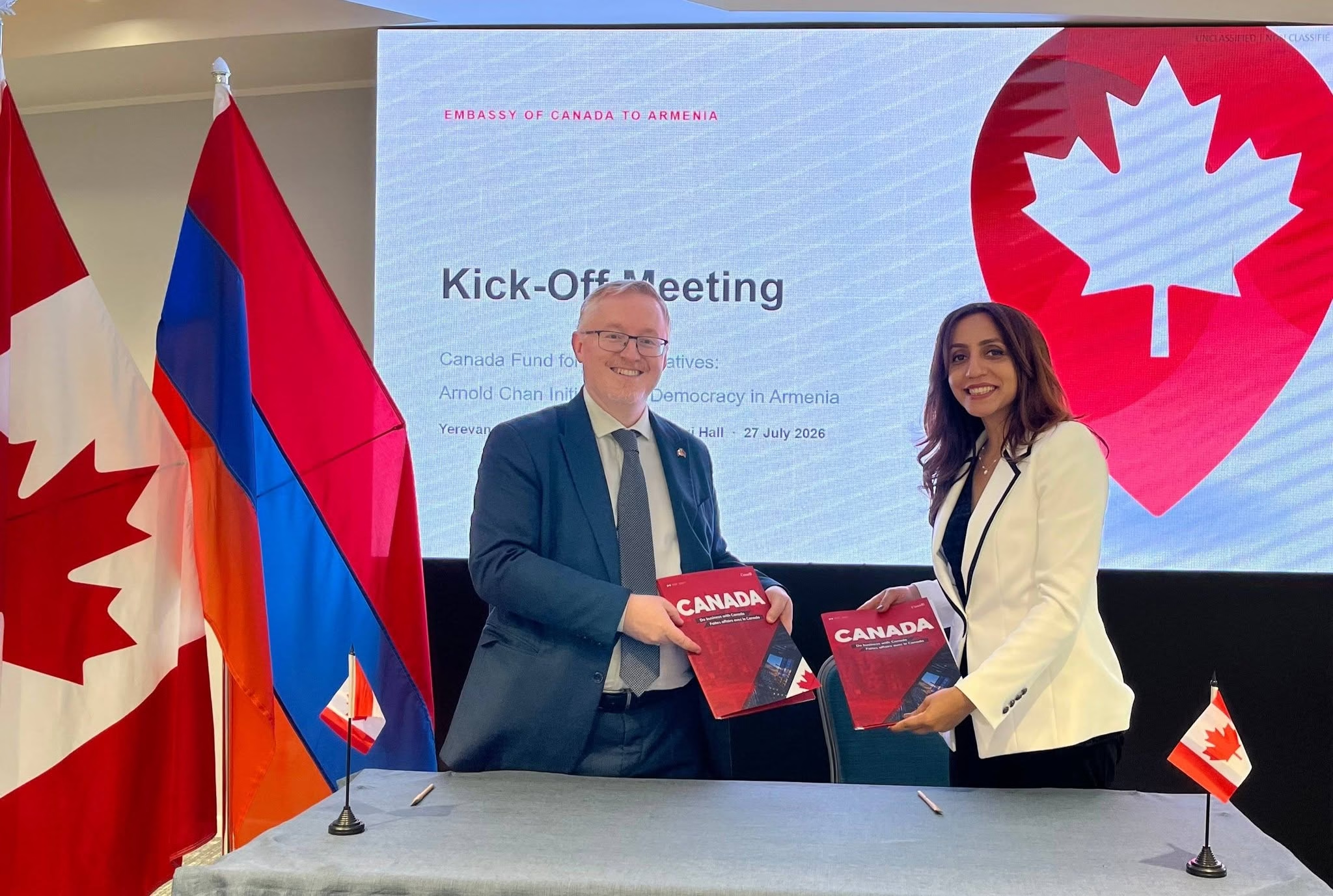
This belief is at the heart of Armenia Corps’ newest partnership with the Embassy of Canada in Armenia through the Canada Fund for Local Initiatives (CFLI) – Arnold Chan Initiative for Democracy in Armenia.
From August 2026 to February 2027, Armenia Corps will implement the project “Co-Creating Village Participation Models from Local Strengths (Built from Within)” in the villages of Ghukasavan and Ranchpar, Masis Consolidated Community, Ararat Region.
The initiative brings together women residents, village administrations, and students from Yerevan State University to co-create and test a participatory collaboration model that connects community knowledge, academic expertise, and local institutional experience in shaping village development.
At the center of this initiative are 20 local, displaced, refugee, and minority women who will work alongside university students to identify opportunities, develop community-driven initiatives, and strengthen mechanisms for inclusive participation. Based on this, two tested, replicable “Village Participation Models from Local Strengths” will be produced.
By connecting local experience with academic knowledge and institutional collaboration, the initiative creates a space where different forms of expertise can work together.
Women participants bring their lived experience, community relationships, and understanding of local priorities.
University students contribute research, facilitation, and evidence-informed approaches.
Community partners provide local context, institutional knowledge, and pathways for collective action.
Together, these contributions form the foundation for a model that can inform future approaches to inclusive local governance across Armenia.
Through this partnership, Armenia Corps will also explore how communities, universities, and institutions can build stronger relationships that enable more meaningful participation and shared responsibility.
The lessons emerging from Ghukasavan and Ranchpar will also contribute to the development of a replicable participation model that can support future collaboration between communities, academic institutions, civil society organizations, and local governments.
“For us, the question is not simply how to increase participation in a village. It is how to design the conditions in which local knowledge can become part of how communities learn, deliberate, and make decisions, and how that knowledge can connect with the expertise and institutional capacity of universities and public institutions.
We are using Ghukasavan and Ranchpar as places to prototype that kind of system: one where community experience is not treated as input to an externally designed process. It is treated as knowledge that can shape the process itself. The longer-term opportunity is to understand what happens when these relationships are intentionally structured, tested, and institutionalized, and whether a model developed from within communities can become part of a broader infrastructure for participatory development in Armenia.” Hayasa Tahmazyan, Founder, Armenia Corps
The “Built from Within” initiative reflects Armenia Corps’ broader mission to strengthen Armenia’s development ecosystem by connecting communities, universities, and institutions through collaborative models.
The project represents one step toward a future in which local knowledge informs decision-making, communities become active partners in shaping their development, and collaboration becomes a foundation for sustainable change.
Armenia Corps extends its sincere gratitude to the Embassy of Canada in Armenia and the Canada Fund for Local Initiatives (CFLI) for their partnership and support in advancing community-led innovation, inclusive participation, and stronger local leadership.
The views expressed herein are those of the author(s) and do not necessarily reflect the official policy or position of the Canada Fund for Local Initiatives (CFLI).